Monday, December 16, 2019


Ancient and new cathedral
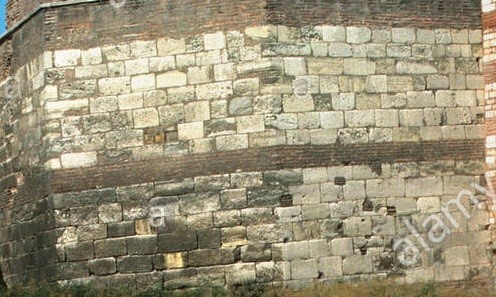
This title is very strange because is present a contradiction, ancient and new is anomalous, but also in Italian Middle age was possible that a cathedral was destroyed and after rebuilt. Cathedral of Sermoneta(Figs.1-3) was destroyed for a war with other town, very next, in south Latium, and feudal family, Annibaldi, from 1235, this is step of document: “He(a priest of this cathedral) that he heard they says that for war that lord of Sermoneta has had with Lando Major from Ceccano, and for rebuild  of this church, religious celebrations were in other church…”,, interest in this document is that this priest said rebuild, then when Annibaldi, feudal family of Sermoneta, would rebuild this cathedral needed of material, and an ex convent of Basilian monks, today abbey of Valvisciolo, was perfect, then is was dismantled and reassemble with other form to this cathedral. I must consider where is, now, this material: first pillars(Figs.4-12) of cathedral have a form of stones that is specular to some fragmentary pillar of Basilian church in Valvisciolo(Figs.8,10), if we confront these pillars we can see that are equal structure and equal cut of stones, and these stones are equal to stones of ancient walls of Constantinople(Fig.9), capital of Byzantine imperium, and these stone are equal to Byzantine wall of Crotone(Fig.11), in south Italy; abacuses of cathedral are from this Basilian church and style is evident, because merely Byzantine(Figs.13-16), this form has used also to basis of pilaster both in Basilian church and in cathedral(Figs.17-18), because basis of cathedral are same of Basilian church. But original church was with one nave alone, and we can imagine this build with a photo(Fig.19)[1], and we can find original Byzantine nature of material trough an inscription on one pilaster(Fig.20), that said in ancient Greek, or Byzantine Greek of 8th century after Christ, Πρoΰ θ(εος), in front of God, may this inscription was set to access of Basilian church, and it indicated nature of building, typical of Middle age when advises have written on principal door of city. Other sign of Basilian and Byzantine nature is form of pillars; plane is on Greek cross in conformity with Byzantine architecture (Figs.21-22). Accesses of this cathedral were on two side, today covered by chapels, but we can intuit these accesses for some remained structure(Figs.23-24), and we can see original access on left side for a modified photo(Fig.25). Other structure that was completed this cathedral was chapter room, today first room of Diocesan Museum, structure of vault(Fig.26) is equal to span of cathedral(Fig.27), and one window closed(Fig.28) is equal to other original windows in cathedral, similarly closed(Fig.29). A relevant work is interest of Francesco da Volterra(1535-1595) a famous Italian architect that worked also to Caetani family in Sermoneta, to two churches, and to these windows in cathedral(Figs.30-32): I can proof this attribution because other windows to other church in Sermoneta, Saint Mary of Graces(Figs.33-34). This cathedral has unified Byzantium, Basilian and Italian Renaissance, therefore this church is monument  to unity both religion and style.
Alessandro Lusana             


[1] I want thank Mister Vincenzo Corbi for this photos.
1
2
3
4
5
6
7
8
9
10
11
12
13
14
15
16
17
18
19
20
21

22
23
24
25
26
27
28
29
30
31
32
33
34


Hamingway

A disappeared church
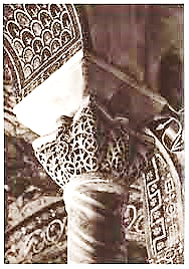
This essay[1] is about a church that is datable around 9th century after Christ, when Italy and Rome, above all, was conquered by Byzantium, now Istanbul; then much religious member of religious order this is Basilian order, born in Constantinople during 9th century and widespread on Byzantium and Italy, above all by presence and election of Byzantine pope, above all pope Zacharias(741-752), that was very next to Byzantium and his imperator, Constantine fifth. Zacharias introduced much Byzantine culture and also in Rome and also to south Latium, particular Sermoneta, where was this disappeared church. This church, whose we don’t known name, was built by member of Basilian order in cloister of actual abbey of Valvisciolo(Figs.1-4), why can we say it? First form of cloister, this is square and above all to stones that now are present in pillar of cloister, to arches that are typically Byzantine and other. First plan is square, and this particular form is very common to Byzantine church, this is Saint Sophia and other now in Istanbul or ancient Constantinople(Figs.5-7), we must consider that Byzantine imperium was also in Italy until Ravenna, in central Italy, therefore also architecture of Ravenna(Fig.8) is to some exemple very meaningful as Saint New Apollinaire and in Class(Fig.12) typical architecture of Byzantium, that during 9th century was used by Basilian order to this church in Valvisciolo. Arches(Fig.9) that now are present in cloister are typical architecture from Byzantium(Figs.10-13); the stones that now are to pillars of Basilian church are very next to much building of Byzantium and Byzantine(Figs.14-17bis,ter, quattuor); capitals are more over very next much exemple of Byzantium and Ravenna (Figs.18-20), these capitals have took during 13th century in Sermoneta and used both to building of cathedral of Saint Mary(Figs.25-27), and to some column today in a Medieval tower(Fig.23). Form of abacuses(Figs.25-27) in the mentioned cathedral are very specular to exemple in Ravenna and Byzantine architecture(Figs.18-20). A column, fortunately again complete, shows a form very strange to medieval architecture in Italy(Fig.28), in fact octagonal plane of this column is strange in Latium and in Rome, but it is very next to Byzantium style; it is sufficient see pillars of monument to Theodoric in Ravenna(Fig.30), that is very similar to our column and pillar; because a pillar is again complete(Fig.29) in cloister of Valvisciolo, and I think that this pillar supported a sculpture of saint that given name to church, but important is that this pillar has an octagonal form, like column in Medieval tower in Sermoneta. Basilian order was an ascetical religious order, and  therefore the presence of church was present always; in fact along perimeter of cloister(Figs.31-33), at 1957, was worked restores and worker found trace of wells of cells, this is cells of monks that were in direct contact with church by arches. Where is now this Basilian church? We can think that now it has destroyed, but we must correct this affirmation because this church has dismantled and built again to other church for a destruction for a battle between Annibaldi family and other next town, Sezze Romano, at 1235; for this war, a document tells that the church of Saint Mary was building. To this rebuilding was necessary both worker and also material; cost of this was very important, then costumers took profit and dismantled Basilian church. Other architectonical document about Byzantine presence in Sermoneta is a church; this is first building of church of Saint Michael Archangel, or better, a town of this church that is, fortunately, remained complete during centuries(Fig.34); this town of church today is ignored, but it is original Basilian church in Sermoneta centre. The entry to church during 9th century was trough a staircase (Figs.35-36); this opinion is supported by position of painting with Christ, that is very similar to position to other painting and mosaic on the apses on the church in south Italy, inspired to Byzantine architecture, as church of Monreale, Palermo; then the access to church was staircase that now is access and exit to a room. Other characteristic of Basilian order was isolation, this is convent of Basilian usually were isolated, then this church was in region of Sermoneta particular isolated, we must consider that during 9th century Sermoneta was depopulated then perfect to exercise of asceticism we can see isolated town by a painting of 1610(Fig.39), this town is called Pagan valley, somebody has though that this name was to a pagan temple, but we must red Du Cange, Glossarium mediae et infimae latinitatis, a vocabulary that describes every Latin word and his mean during century after fall of Roman empire, and to word pagus he tells that this word means also field and territory, therefore a field that monks cultivated, where now are home and other then was alone field.
Alessandro Lusana


[1] I want thank mister Vincenzo Corbi for some photos of this assay that he has cured.


Alessandro Lusana
Fig.1
Fig.2
Fig.3
Fig.4
Fig.5
Fig.6
Fig.7
Fig.8
Fig.9
Fig.10

Fig.12
Fig.13
Fig.14
Fig.15
Fig.16
Fig.17
17bis
17ter
17quattuor
18

19
20
21

22
23

24
25
26
27
28
29
30

31

32
33
34
35
36
37
38
39
40


Friday, December 13, 2019


De Tocqueville: a traveller
Alexis de Tocqueville(1805-1859), France writer and judge in France during 19th century come in USA between 1831 and 1832, and he kept rapports with much members of society and politics, members of congress and judge and attorney and very intellectual men; he written these images of America, red USA, in a diary or log, and he describes very punctually, the states that then were USA, we must consider that much states are absent among description because not were present. Anyway Tocqueville  describes system and he writes dialogues and episodes about some state with characteristics and he defined with his description democracy in states: therefore social class, schools, slavery and other, with distinctions and very examples of democracy, that in Europe were unknown, this is not were thought as dynamic spirit of States, that in Europe was very ignored, one example is meaningful, at 25th November  1831, Tocqueville tells that: “ I met a rich property of Illinois and I asked if any European were present as immigrants and he answered “ No much are from Ohio”, and Tocqueville continues: “40 years ago Ohio was desert and now his capital town has 30 years life and new generation not finds possibility to be rich, therefore it goes to new towns”, this words are very important because it is American spirit, that I repeat, was unknown to Europe; but we must consider that some European costume was present, because European immigrant brought also their spirit and costumes therefore, if one member of high social class compromises a girl of same class  because he is received to family he loses his honour and reputation; in Europe for this behaviour was established duel but honour was lost; some dialogue was a France lord that seems preferred monarchy to democracy because he says that: “A govern monarchic is preferable to a democracy govern, because govern of one alone has strong and coherence; but we must consider that this lord evidently not has been in Europe during 19th century, and he continued: “A republic is managed very less good than a monarchy, typical opinion of a man that hasn’t looked monarchy or a govern different by democracy. To political model de Tocqueville says that American people is developer than other European people; to vote to black he tells that in Philadelphia it was possible and legal, as he tells, at 22th October 1831, in Philadelphia: “Much persons in American spoken that black are inferior. Much other spoken contrary, and they proof this thesis for cleverness of black young at school and other black that become rich after got over much difficult, and one black that is become very rich with a property very great with much ship and black captain, and de Tocqueville speaks around America and his first  citizen, European citizen, therefore he says: “American have brought in this country from European that was more democrat. They have arrived and they have left prejudices to nationalism. They have become a new nation, they have took new costumes; therefore de Tocqueville describes that he seen with much appreciations about American society, and he takes these information directly from American or European that live in America, that could make a confront between realities much different, therefore for de Tocqueville we have a portrait of America and a portrait of evolution political European in America, with characters very different, but similar to some behaviour; therefore today the Europe would be as the America if it isn’t Europe.
Alessandro Lusana 
                            

  The idea: limitation of the sensible real The concept of idea to day is automatically rapport to a find more or less frequent and origin...